

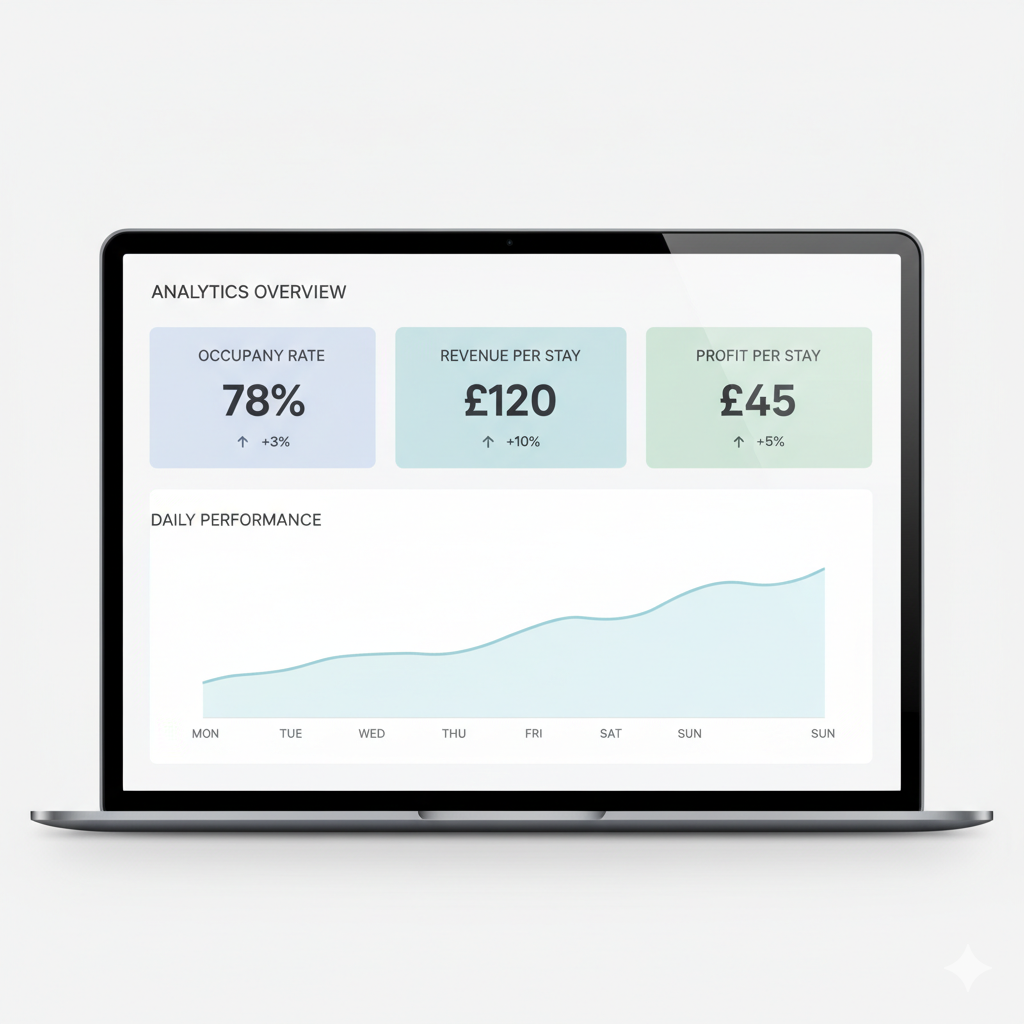
Most short-term rental operators obsess over two metrics: occupancy and reviews.
Both matter — but neither tells you whether a listing is profitable.
After working with hosts, co-hosts, and property managers, I’ve found there are three questions that matter far more than nightly rate or star ratings:
1️⃣ Which listings are actually generating profit after expenses?
2️⃣ How does spending on guest experience impact margins?
3️⃣ What does next month’s cash flow actually look like?
To answer those, you only need a simple framework I call The 3-Point Profit View — a practical way to see your STR business with CFO-level clarity, even if you aren’t using full accounting software.
Let’s break it down.
1️⃣ Unit-Level Profit: Understanding What Each Listing Truly Earns
This is where most hosts get surprised.
A listing with high revenue can still be one of your least profitable units once you account for:
- Turnover labor or cleaning fees
- Consumables (toilet paper, paper towels, coffee, linens)
- Booking platform fees
- Repairs and minor maintenance
- Restocking amenities
- Laundry costs
- Taxes and licensing fees
- Co-host or management splits (if applicable)
The goal: see how much each stay actually contributes to profit.
Key metrics to track:
- Profit per booking
- Profit per occupied night
- Profit per available night (RevPAN) — your true performance metric
- Turnover cost per stay (this is the margin killer)
Once operators see this breakdown, they often discover:
- One “high-revenue” unit is secretly draining cash
- One “average” unit is their most efficient earner
- Certain types of guests consistently drive more wear-and-tear costs
2️⃣ Experience-Driven Margin Impact: How Guest Experience Spend Affects Profitability
Most hosts overspend here — but smart hosts invest intentionally.
There are really two categories of guest-experience spending:
A. Value-Adding Spend (improves both reviews and margin)
- Smart locks + automated check-in
- Noise monitoring (reduces risk and cleaning issues)
- High-quality paper products
- Professional photography
- Clear, automated messaging sequences
These investments increase guest trust, booking conversion, and repeat stays.
B. Vanity Spend (improves reviews, hurts margins)
- Expensive snacks and welcome gifts
- High-end toiletries
- Premium coffee setups
- Monthly décor refreshes
- Over-personalization that doesn’t scale
These expenses feel nice but rarely move the profit needle.
The question to ask:
“Does this spend increase revenue or reduce labor — or just feel nice to provide?”
Guest experience should be measured by ROI, not emotion.
3️⃣ 30-Day Booking Forecast: Predictable Cash Flow Before the Month Even Starts
Even profitable listings hit slow seasons. The difference between struggling hosts and stable hosts is forecasting.
A simple forecast gives you:
- Expected revenue for the next 30–60 days
- Known expenses (turnovers, supplies, platform fees)
- A projected cash-on-hand number
- Early warnings for slow months
- Time to adjust pricing or promotion strategies
The goal: never be surprised by a lean month again.
What you can forecast with 20 minutes per month:
- Confirmed bookings × nightly rate
- Estimated variable costs
- Seasonal adjustments
- Occupancy pacing vs. last month
- Cash flow after expenses and savings allocation
With this visibility, hosts stop reacting and start planning.
Putting It All Together: “The 3-Point Profit View” Snapshot
When you combine all three points, you get a complete picture:
- Unit-level truth: which listings to grow, fix, or exit
- Experience ROI: spending that actually improves profit
- Cash-flow certainty: clarity over the next 30–60 days
This is the foundation of running a short-term rental business like a real company — simple, predictable, and profitable.
✅ Short-Term Rental Profit Checklist
A quick reference you can send to Donald or other hosts.
1️⃣ Unit-Level Profit
✔ Calculate profit per stay
✔ Track cleaning & turnover costs
✔ Track consumable restocking costs
✔ Track platform + payment fees
✔ Track repairs & maintenance
✔ Compare profit per occupied vs. available night
✔ Identify high-margin vs. low-margin units
2️⃣ Guest-Experience ROI
✔ List all guest-experience costs
✔ Label each as “Value-Add” or “Vanity”
✔ Keep only what improves conversion, reviews, or labor savings
✔ Cut items with no measurable revenue impact
✔ Standardize amenities so costs stay predictable
3️⃣ Cash-Flow Forecast
✔ List confirmed bookings for next 30–60 days
✔ Estimate variable costs for those bookings
✔ Add fixed monthly costs (cleaning subscriptions, software, utilities)
✔ Forecast net cash flow
✔ Adjust pricing or promotions early if needed
When you zoom out and view your short-term rental business through these three lenses, the noise falls away. You’re no longer reacting to occupancy spikes or chasing reviews — you’re managing a real operation with predictable margins, repeatable processes, and clear financial footing. Profit becomes measurable, not mysterious. And with that level of visibility, every decision you make carries more confidence and less guesswork.
— Written by William Copeland, Copeland Bookkeeping