

As a small business owner, you’ve likely heard your bookkeeper or accountant mention the “Chart of Accounts”—but what exactly is it, and why does it matter?
What Is the Chart of Accounts?
Think of the Chart of Accounts (COA) as the blueprint of your business finances. It’s a structured list of all the accounts used to categorize every transaction in your bookkeeping system. Whether you’re tracking income, expenses, assets, or liabilities, the COA is the framework that organizes it all.
Why Does It Matter?
A well-organized COA gives you:
- Clarity: Know exactly where your money is going.
- Control: Make smarter business decisions based on real data.
- Compliance: Prepare accurate tax returns and financial statements.
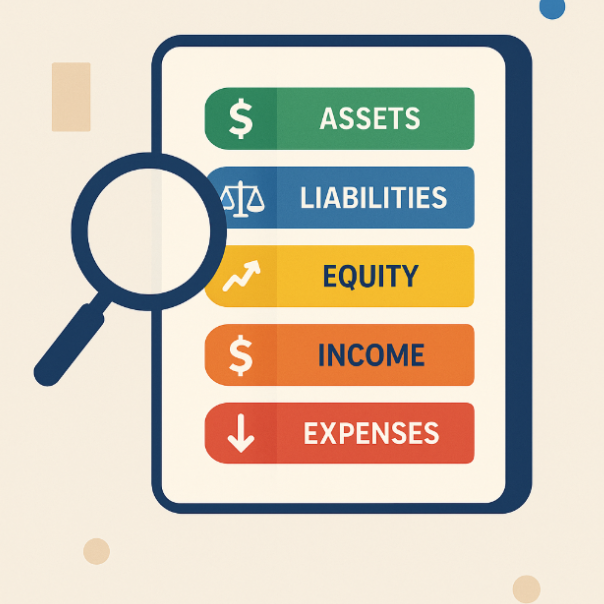
The 5 Core Categories of a COA
- Assets – What your business owns
(Examples: Bank accounts, equipment, accounts receivable) - Liabilities – What your business owes
(Examples: Loans, credit card balances, taxes payable) - Equity – Your ownership stake in the business
(Examples: Owner’s contributions, retained earnings) - Income – Money coming in
(Examples: Sales revenue, service income) - Expenses – Money going out
(Examples: Rent, payroll, office supplies)
Each of these categories may include dozens of sub-accounts, depending on the complexity of your business.
Tips for Keeping It Simple
- Use consistent naming conventions (e.g., “Utilities – Office” instead of just “Utilities”).
- Avoid clutter—don’t create a new account for every single expense.
- Customize wisely—start with a basic template, then adjust based on your business needs.
Bonus Tip: Review It Regularly
As your business grows, your COA should evolve with you. Review it at least once a year (or when your business model shifts) to make sure it still reflects your operations accurately.
Final Thoughts
You don’t need to be a CPA to understand your Chart of Accounts—you just need a clear, simple setup that works for you. When your COA is clean, your books are clean, and that’s the foundation of a healthy business.